
Incident or Claim? How Coaches Should Respond to Protect Their Practice
Apr 22, 2026
Originally published | Updated
Unexpected situations can arise in any coaching practice.
A client raises a concern, expresses dissatisfaction, or you receive a message that feels more serious than usual. Naturally, your mind starts racing: What do I do? Who do I contact? Am I covered?
Could this situation escalate into a formal complaint or claim?
Even the most experienced and ethical coaches can find themselves in this position. It doesn’t necessarily mean you made a mistake—it may simply mean a client perceived something differently, and it needs to be addressed thoughtfully and professionally.
At APC, we support coaches in navigating these moments with clarity and confidence.
This article will help you understand the difference between an incident and a claim, know what steps to take, and understand how APC supports you if a concern arises.
An incident is a situation related to your professional services that could potentially lead to a claim, but no formal demand or legal notice has been made. For APC members, a claim begins when you receive written notice indicating that a client intends to seek compensation or pursue legal action.
Incident vs. Claim: Why the Distinction Matters

An incident is a situation related to your professional services that could potentially lead to a claim, but where no formal demand or legal notice has been made.
Many incidents can be resolved early through clear communication, appropriate boundaries, and careful documentation.
Examples of incidents can include:
- A client expresses emotional distress after a session
- A client feels misunderstood or dissatisfied with the coaching process
- A client raises concerns about expectations or outcomes
- A client or third party reports damage related to your professional activity
Incident vs. Claim at a Glance
| What to Know | Incident | Claim |
|---|---|---|
| What is it? | A situation related to your professional services that could potentially lead to a claim. | For APC members, written notice indicating that a client intends to seek compensation or pursue legal action. |
| Has a formal demand been made? | Not necessarily. A concern or problem has arisen, but there may be no formal demand or legal notice. | Written communication indicates that compensation or legal action is being pursued. |
| What should you do? | Document what happened, respond professionally, and contact APC if you are unsure or believe the situation could escalate. | Contact APC promptly and be prepared to provide relevant documentation and communication. |
Important: Any situation involving physical injury or property damage should be reported immediately to your insurance provider.
If you are a member with APC, a claim begins when you receive written notice—such as an email, letter, attorney communication, or formal request—indicating that a client intends to seek compensation or pursue legal action.
When an Incident Happens
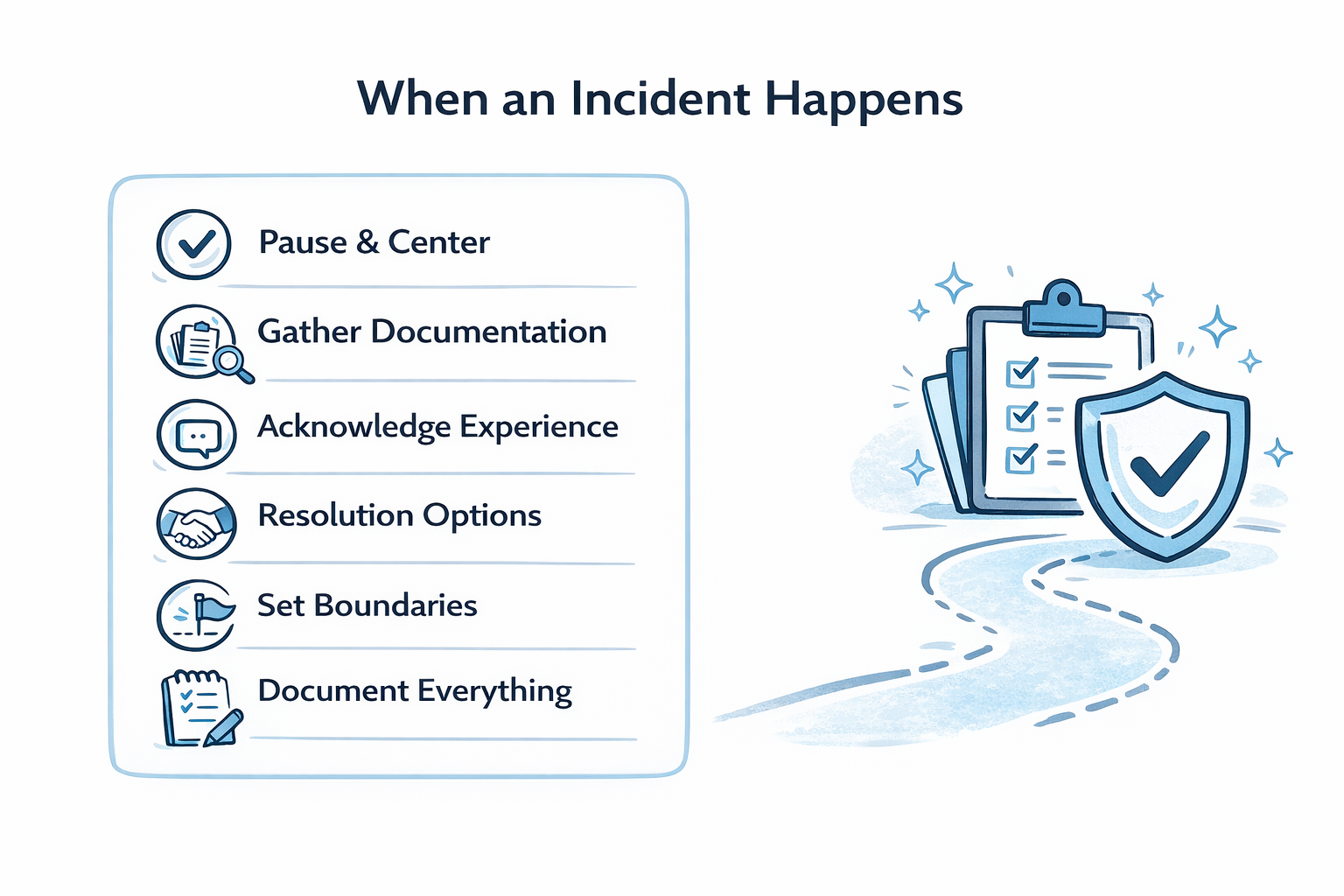
When a client expresses concern or dissatisfaction, it can feel unsettling—even for experienced professionals. These situations call for clarity, professionalism, and composure.
The steps below can help you navigate the situation responsibly while maintaining appropriate boundaries.
- Take a moment before responding
Approach the situation from a calm and professional mindset rather than responding immediately out of stress. Your response can shape how the situation unfolds.
- Gather your documentation
Review your client agreement, intake forms, session notes, and written communication. This helps you stay grounded in what was discussed and agreed upon.
- Acknowledge the client’s experience
Use neutral, respectful language. Acknowledge the client’s experience without assuming responsibility when the situation is unclear. Focus on understanding the concern and identifying appropriate next steps.
- Work toward a reasonable resolution
Ask what the client is seeking. In many situations, they may be looking for clarification or reassurance.
You may consider:
- Offering a brief follow-up conversation
- Providing clarification about the coaching process
- Offering a refund as a goodwill gesture without admitting wrongdoing
- Stay within your professional role
If the concern involves areas outside coaching—such as mental health or medical issues—it is appropriate to refer the client to a qualified professional. This protects both you and the client.
- Set respectful communication boundaries
If communication becomes frequent or unstructured, set clear limits. For example:
- Suggest a scheduled time to address concerns
- Set expectations for response times
- Keep communication within one thread or channel
This helps maintain clarity and professionalism.
- Document everything
Keep a detailed, dated record of relevant communication, including emails, messages, and call notes. This documentation can become important if the situation escalates.
- Reflect on your communication approach
Consider whether any part of your messaging could have created confusion or unintended expectations. You may identify opportunities to clarify how you describe your role, services, and outcomes.
- Contact APC if needed
If you are unsure how to proceed or believe the situation could escalate, reach out to APC promptly. Early communication helps ensure the appropriate next steps are taken.
Tip: It’s better to report a situation early if it has the potential to develop into a claim.
How to File a Claim: Step-by-Step
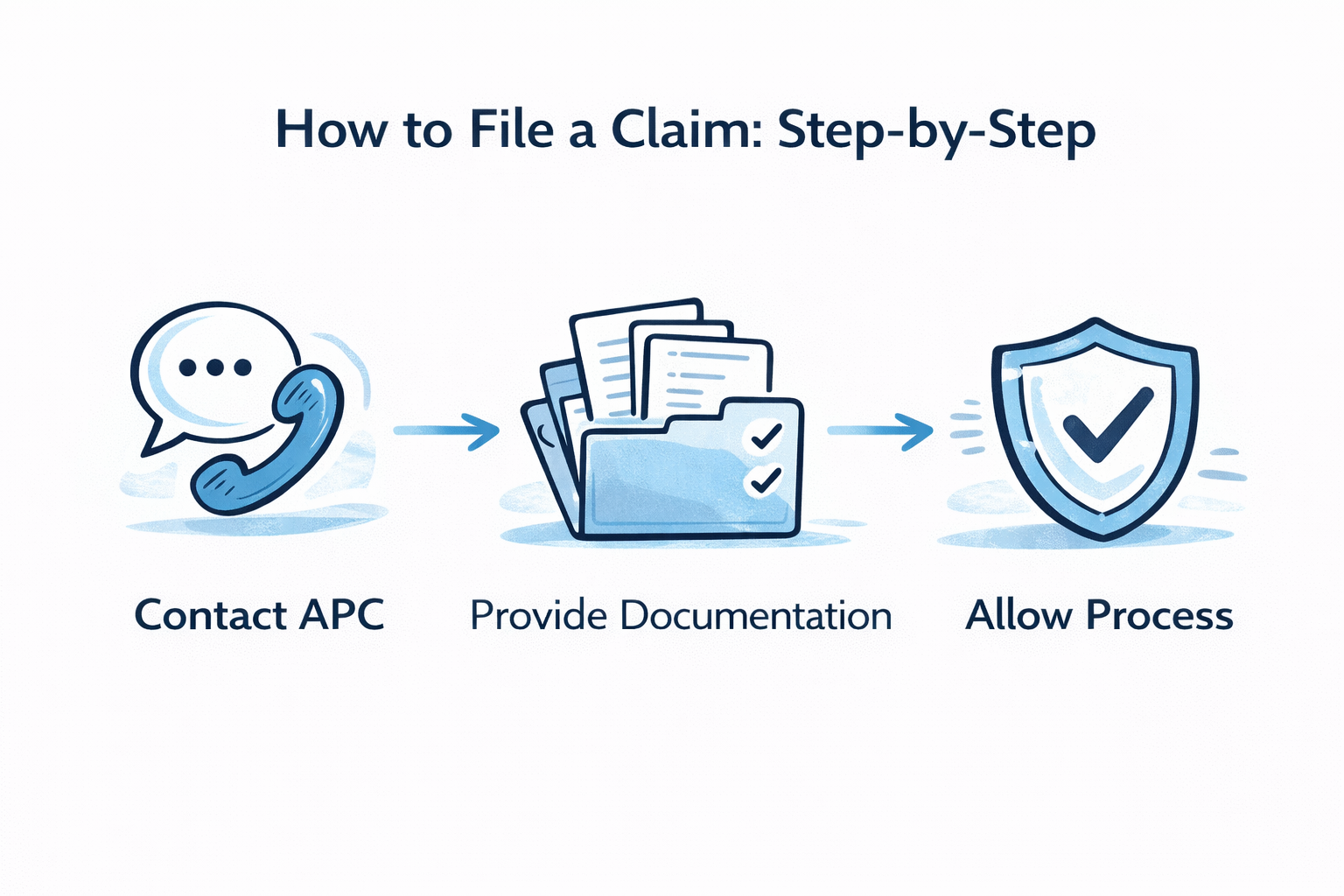
If a situation progresses beyond an incident, follow these steps:
- Contact APC
Notify APC by phone or email. We’ll help assess the situation and guide you on the next steps.
- Provide Supporting Information
Prepare relevant documentation, including:
- Certificate of Insurance
- Client agreements and intake forms
- Session notes
- Emails or other written communication
Providing complete information supports accurate reporting and review.
- Allow the Claims Process to Proceed
Once the claim is submitted, the insurance provider will manage the claims process. If additional information is needed, they will reach out.
APC remains available to support you throughout the process.
Common Mistakes Coaches Make When Responding to a Situation

Even experienced professionals can make missteps under pressure. Here are four to be aware of:
- Letting fear guide your response
Reacting quickly out of stress can lead to unclear communication or overexplaining. Take time to respond thoughtfully.
- Making assumptions
Avoid jumping to conclusions about what happened or why. Focus on the facts and documentation available to you.
- Ignoring the emotional impact
Even minor concerns can feel personal. Seek appropriate support from trusted peers or professionals while maintaining client confidentiality.
- Overcorrecting your entire process
One situation does not necessarily mean your entire approach needs to change. Reflect carefully before making broader adjustments.
What’s Next: How APC Supports You During and After a Claim

Most coaches don’t expect to face a claim—and often, they won’t. But when something does arise, preparation matters.
Having the right coverage means:
- You know what steps to take
- You have support in place
- You don’t have to navigate the situation alone
Even experienced coaches can feel uncertain in these moments. That’s why having a clear process—and appropriate protection—matters.
You may never need to file a claim. But if you do, you’ll be prepared.
Want to understand the coverage behind the claims process? Learn how professional and general liability, occurrence-based coverage, policy limits, defense costs, Certificates of Insurance, and other protections work in our Complete Guide to Liability Insurance for Coaches →
Related Articles for Professional Coaches
Keep building a well-protected and professional coaching practice with these related APC resources.
Should I Form an LLC for My Coaching Practice?
Understand how business structure and liability insurance serve different roles in protecting a coaching practice.
Read the Article →What Makes a Professional Coach? 5 Ways to Show Credibility
Explore communication, boundaries, professional standards, and responsible practices that help strengthen credibility.
Read the Article →Does APC Insurance Apply If You Practice Internationally?
Learn important coverage considerations for U.S.-based coaches working with international clients or traveling abroad.
Read the Article →Disclaimer: This article is for educational purposes only and does not provide legal, financial, or medical advice. The examples are general, and coverage may vary by policy. Always refer to your insurance provider or policy language for specific details, as policy terms take precedence. For legal concerns related to your practice, consult an attorney.